


Every call, data transfer, and live stream depends on flawless signal integrity. Behind the switches and fibre panels that make modern communications possible lies an invisible network of cables, connectors, and splices that must survive heat, vibration, moisture, and time.
To protect these critical links, technicians rely on one deceptively simple material: heat shrink tubing.
In telecommunications, heat shrink does far more than tidy cables. It insulates, seals, labels, and strengthens connections that operate 24 hours a day in environments ranging from climate-controlled data centres to windswept cell towers.
Why Heat Shrink Tubing Matters in Telecom
Telecommunication systems move information as pulses of light or electrical signals. Even a small flaw in cable insulation can introduce interference or moisture that distorts those signals. Heat shrink tubing ensures every splice, connector, and joint remains sealed and stable.
When heated, the tubing contracts tightly around the component, forming a durable layer of protection. Depending on the type—single-wall for insulation or adhesive-lined dual-wall for sealing—it provides:
- Electrical isolation between conductors
- Mechanical strain relief at terminations
- Protection from abrasion and weather
- Corrosion resistance in damp environments
In short, it keeps the network’s physical layer healthy so the data layer never notices.
Where It’s Used
1. Fibre-Optic Networks
Fibre cables are the arteries of modern telecom. Each glass strand carries light signals that must remain perfectly aligned and uncontaminated. After splicing fibres, installers use clear or colour-coded heat shrink sleeves to:
- Protect delicate fusion splices from dust and tension.
- Maintain alignment within splice trays.
- Provide visual identification without obscuring inspection.
Adhesive-lined versions ensure a hermetic seal, blocking out microscopic moisture that can degrade fibre over time.
2. Copper and Coaxial Systems
Though fibre dominates long-haul lines, copper and coax still serve in legacy and short-range networks. Heat shrink tubing prevents oxidation at connectors, shields exposed conductors, and reinforces crimps in:
- Telephone cross-connect boxes
- Broadband coaxial links
- Remote radio heads and satellite feeds
Using UV-resistant tubing outdoors prevents cracking and signal loss caused by water ingress.
3. Outdoor and Underground Cables
Telecom lines often run through ducts, towers, and buried conduits. Environmental sealing is critical. Adhesive-lined polyolefin tubing creates a watertight barrier around splices and terminations, keeping rain, condensation, and soil chemicals out.
For aerial installations, heavy-wall heat shrink provides additional mechanical strength and resists UV radiation, extending service life even under constant sunlight.
4. Data Centres and Server Rooms
Inside controlled environments, technicians use thin-wall tubing to bundle patch leads, colour-code connections, and label circuits. Clear heat shrink sleeves applied over printed identifiers create a professional, permanent finish that won’t fade or peel.
This level of organisation reduces downtime and simplifies future maintenance—vital in high-density racks where hundreds of identical cables coexist.
Types of Heat Shrink Tubing Used in Telecom
Single-Wall Polyolefin
Lightweight, flexible, and flame-retardant. Ideal for general insulation, colour coding, and strain relief inside cabinets and enclosures.
Adhesive-Lined Dual-Wall
Combines polyolefin with an inner layer of heat-activated adhesive. When heated, it bonds to cable jackets and connector backshells, forming a watertight seal perfect for outdoor or buried cables.
Clear Heat Shrink
Transparent polyolefin that protects and displays printed identifiers or colour bands—common in structured cabling and patch-panel organisation.
UV- and Weather-Resistant Tubing
Formulated with stabilisers to prevent cracking and fading in sunlight. Used on antenna feed lines, roof-mounted junctions, and tower cabling.
High-Temperature or Fluoropolymer Tubing
PTFE or FEP types withstand extreme heat, chemicals, and mechanical stress, suitable for telecom gear exposed to constant power cycling or RF energy.
Selecting the Right Shrink Ratio
Telecom work often involves connectors and transitions of varying diameters. A 3:1 or 4:1 shrink ratio ensures the tubing fits over bulky connectors yet contracts tightly around smaller cable jackets.
- 2:1 – best for uniform cables in indoor racks.
- 3:1 – ideal for splice protection and light sealing.
- 4:1 – preferred for outdoor terminations or irregular connectors.
Choosing the proper ratio prevents gaps, air pockets, and uneven compression that could allow moisture to creep in.
Step-by-Step: Applying Heat Shrink Tubing in Telecom Work
-
Prepare the Cable or Splice
Clean the surface of oil and dust; contaminants weaken adhesion. -
Cut Tubing to Length
Leave at least 1 cm overlap beyond the joint on both ends. -
Position the Tubing
Slide it into place before heating. For multi-step assemblies, start with the innermost layer first. -
Apply Even Heat
Use a heat-shrink gun, not an open flame. Begin in the centre and move outward, rotating to distribute heat evenly. -
Inspect and Cool
The tubing should appear smooth and conformal with no bubbles. Allow it to cool before moving or stressing the cable.
Proper technique guarantees uniform sealing and long-term reliability.
Learn more: Colored Heat Shrink Tubing: Versatile Solution for Insulation and Identification.
Common Challenges in Telecom Applications
Moisture Intrusion
Outdoor enclosures are constantly exposed to condensation. Adhesive-lined tubing mitigates this risk, but improper cleaning or insufficient heating can leave micro-leaks.
UV Degradation
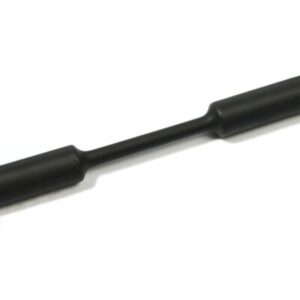
Standard polyolefin can crack in sunlight. UV-stabilised black tubing or heavy-wall adhesive-lined variants resist these effects.
Tight Spaces
In dense fibre trays, applying heat evenly without damaging adjacent fibres can be tricky. Use precision nozzles or low-temperature guns to control airflow.
Overheating
Excess heat may deform thin-jacketed fibre cables. Always move the heat source steadily and monitor temperature.
The Role of Colour and Identification
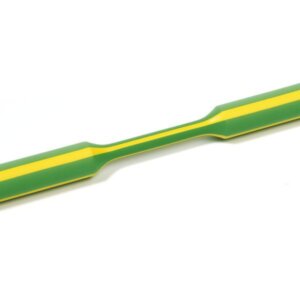
In large telecom networks, colour coding saves hours during maintenance. Heat shrink tubing offers permanent, fade-resistant identification that standard markers can’t match.
- Blue, yellow, red – phase or circuit designation.
- Clear tubing over printed labels – preserves legibility.
- Striped tubing – identifies fibre counts or bundle groups.
Environmental and Safety Compliance
Telecom sites often operate under strict safety and fire regulations. Quality heat shrink tubing meets recognised standards such as:
- UL 224 – flame-retardant performance.
- CSA C22.2 – Canadian electrical certification.
- RoHS / REACH – restriction of hazardous substances.
- MIL-DTL-23053 – military-grade material reliability.
Compliance ensures the tubing not only performs mechanically but also meets environmental and safety expectations in critical infrastructure.
Product Example: CTU Adhesive-Lined Heat Shrink Tubing
Cable Ties Unlimited supplies a full range of heat shrink products tailored for telecommunications, from fibre-optic sleeves to heavy-wall outdoor tubing.
Product Review
The CTU Adhesive-Lined Heat Shrink Tubing is engineered for professional sealing of telecom splices and connectors. Its dual-wall construction pairs a rugged polyolefin exterior with a hot-melt adhesive lining, forming a reliable moisture barrier once heated.
Key Features
- 3:1 and 4:1 shrink ratios accommodate diverse connector sizes.
- Temperature range: -55 °C to +135 °C.
- Resistant to UV, oil, and salt exposure.
- Available in clear, black, and colour-coded variants.
- Meets UL 224 and MIL-DTL-23053/4 Class 1 standards.
Performance
When applied with a controlled heat gun, the tubing shrinks uniformly and the adhesive flows smoothly, encapsulating joints without bubbling. Field technicians report strong adhesion and consistent recovery even in cold-weather installations.
Verdict
For both fibre and copper networks, CTU Adhesive-Lined Heat Shrink Tubing delivers the balance of flexibility, durability, and sealing power that telecom professionals require.
Real-World Use Cases
- 5G Tower Installations – Protecting RF jumpers and coax connectors from rain and temperature swings.
- Underground Conduits – Sealing fibre splices where condensation is unavoidable.
- Marine Communications – Guarding satellite feed lines from salt corrosion.
- Data-Centre Expansion – Colour-coding patch cables for fast identification.
- Emergency Repair Kits – Providing quick insulation and sealing for damaged field cables.
Across every scenario, the goal is the same: consistent signal quality through dependable physical protection.
Why Professionals Choose Cable Ties Unlimited
Telecom infrastructure demands materials that are proven, certified, and available when needed. Cable Ties Unlimited offers:
- Industrial-grade heat shrink in every common ratio and material.
- Bulk packaging for large-scale rollouts.
- Fast nationwide shipping and technical support.
- Access to trusted brands such as HellermannTyton and Thomas & Betts.
Our mission is simple—equip technicians with reliable tools that keep global communication running smoothly.
Final Thoughts
Telecommunications is the backbone of modern life, and every reliable connection starts with well-protected cables. Heat shrink tubing provides the insulation, sealing, and identification that make those systems resilient against weather, wear, and time.
From the depths of a buried conduit to the precision of a fibre tray, this versatile material ensures that every signal arrives intact. For professionals who build and maintain communication networks, choosing quality heat shrink tubing isn’t a minor detail—it’s an investment in uptime.
Explore Cable Ties Unlimited’s complete range of heat shrink products to keep your network secure, organised, and ready for the future.
For more insights and tips on cable ties and other related products, explore cabletiesunlimited.com, get a quick and free quote, and follow us on our social media communities on Facebook and Instagram!